Taraxacum Officinale (Family: Asteraceae)
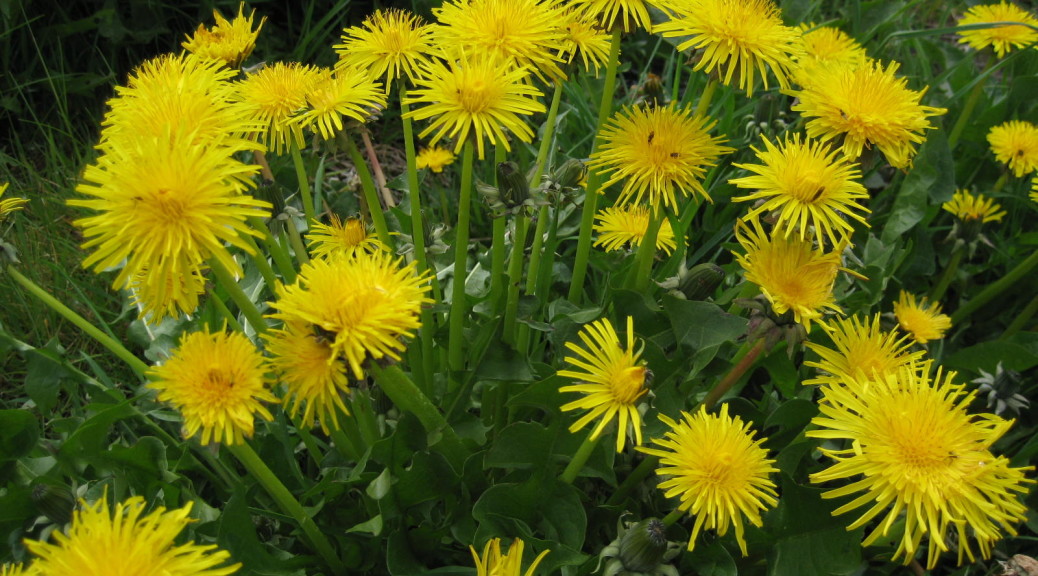
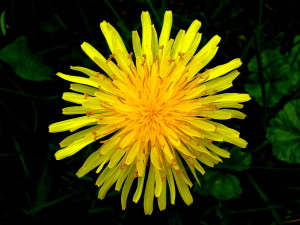
This is well known to have many long and deep gashed Leaves lying on the ground, round about the head of the roots; the ends of each gash or Jag, on both sides looking downwards towards the roots, the middle rib being white which being broken yields abundance of bitter milk, but the root much more: from among the leaves which always abide green, arise many slender, weak, naked foot-stalks, every one of them bearing at the top one large yellow flower, 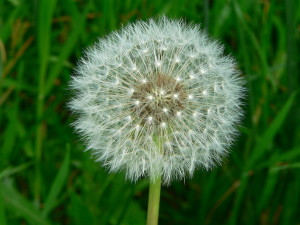 consisting of many rows of yellow leaves, broad at the points and nicked in with a deep spot of yellow in the middle, which growing ripe, the green husk wherein the flower stood turns it self down to the stalk, and the head of down becomes as round as a ball, with long seed underneath, bearing a part of the down
 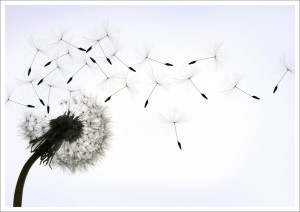 on the head of every one, which together is blown away with the wind, or may be at once blown away with one’s mouth. The root growth downwards exceeding deep, which being broken off within the ground, will yet shoot forth again; and will hardly be destroyed where it hath once taken deep root in the ground.
Place.
It grows frequent in all meadows and pasture- grounds.
Time.
It flowers in one place or other almost all the year long.
Government and virtues.
It is under the dominion of Jupiter. It is an opening and cleansing quality, and therefore very effectual for the obstructions of the liver, gall, and spleen, and the diseases that arise from them, as the jaundice, and hypocondriac; it opens passages of 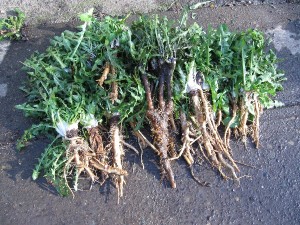 the urine both in young and old; powerfully cleanses iposthumes, and inward ulcers in the urinary passages, and by its drying, and temperate quality doth afterwards heal them; for which purpose the decoction of the roots or leaves in white wine, or the leaves chopped as pot-herbs with a few
 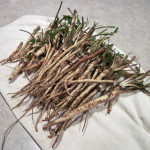 Alisanders and boiled in their broth, are very effectual. And whoever is drawing towards a consumption or an evil disposition of the whole body, called Cachexia, by the use hereof for some time together, shall find a wonderful help. It helps also to procure rest and sleep to bodies distempered by the heat of ague fits, or other wise: The distilled water is effectual to drink in pestilential fevers, and to wash the sores.
You see here what virtues this common herb hath, and that is the reason the French and Dutch so often eat them in the Spring; and now if you look a little farther, you may see plainly without a pair of not so selfish as ours are, but more communicative of the  virtues of plants to people.
Nicholas Culpeper

 be simple, and the citizens should subsist on barley
 the citizens should live “in a civilized manner.” He continues, “They ought to recline on couches … and have the usual dishes and dessert of a modem dinner.” In other words, the citizens should have the “luxury” of eating meat. Socrates replies, “if you wish us also to contemplate a city that is suffering from inflammation …. We shall also need great quantities of all kinds of cattle for those who may wish to eat them, shall we not?”
 medical men also to a much greater extent
 rates writes, “when dissoluteness and diseases abound in a city, are not law courts and surgeries opened in abundance, and do not Law and Physic begin to hold their heads high, when numbers even of well-
 born persons devote themselves with eagerness to these professions?”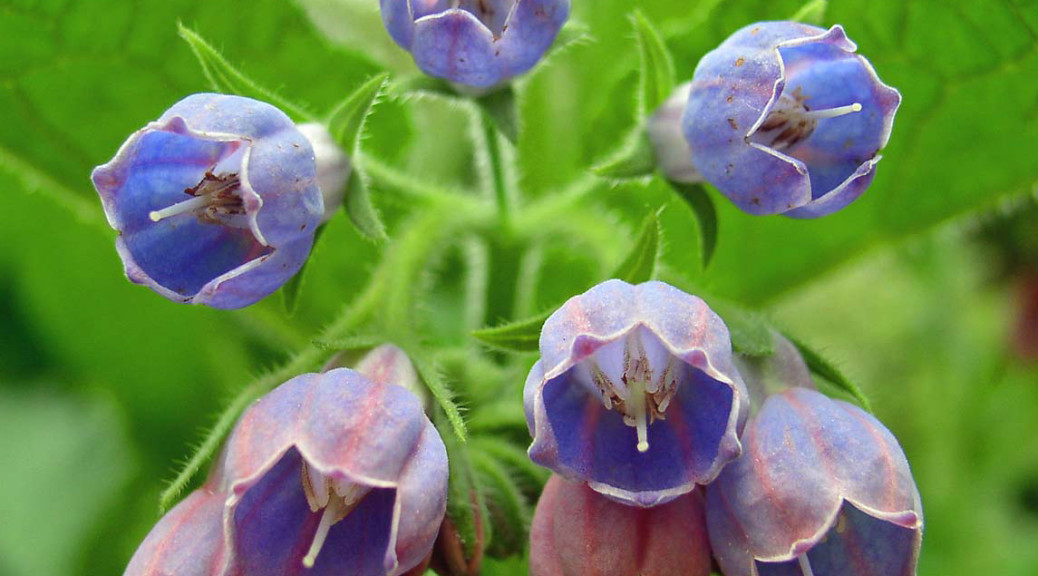
 Description.
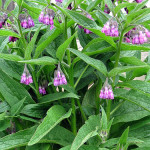
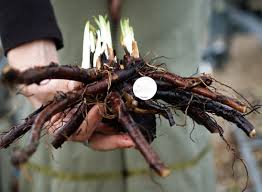
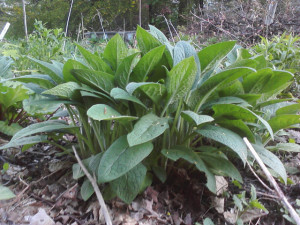 finger of a glove, of a pale whitish colour, after which come small black seed. The roots are great and long, spreading great thick branches under ground, black on the outside and whitish within, short and easy to break, and full of a glutinous or clammy juice, of little or no taste.
 Place.
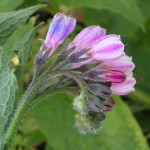 them to be easily spit forth; it stayeth the defluxions of rheum from the head upon the lungs, the fluxes of blood or humours by the belly, women’s immoderate courses, as well the reds as the whites; and the running of the reins, happening by what cause soever. A syrup made thereof is very effectual for all those inward griefs and hurts; and the distilled water for the same purpose also, and for outward wounds and sores in the fleshy or sinewy part of the body wheresoever; as also to take away the fits of agues, and to allay the sharpness of humours. A decoction of the leaves hereof is available to all the purposes, though not so effectual as of the roots. The root, being outwardly applied, helpeth fresh wounds or cuts immediately, being bruised and laid thereunto; and is especial good for ruptures and broken bones; yea, it is said to be so powerful to consolidate and knit together, that, if they are boiled with dissevered pieces of flesh in a pot, it will join them together again. It is good to be applied to women’s breasts that grow sore by the abundance of milk coming into them; as also to repress the over much bleeding of
 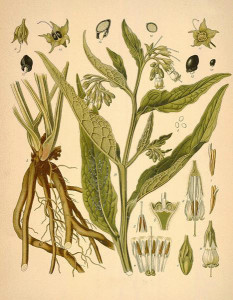 the hemorrhoids, to cool the inflammation of the parts thereabout, and to give ease of pains. The roots of comfrey taken fresh, beaten small, and spread upon leather, and laid upon any place troubled with the gout, do presently give ease of the pains; and applied in the same manner, give ease to pained joints, and profit very much for running and moist ulcers, gangrenes, mortifications, and the like, for which it hath by often experience been found helpful.
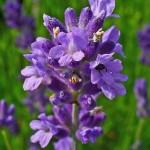 Lavandula angustifolia. (Family: Lamiaceae)
 Government and virtues.
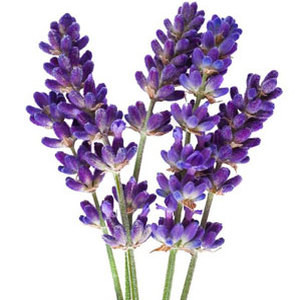
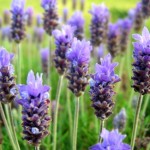 taken, helps them that have lost their voice, as also the tremblings and passions of the heart, and faintings and swooning, not only being drank, but applied to the temples, or nostrils to be smelled unto; but it is not safe to use it where the body is replete with blood and humours, because of the hot and subtile spirits wherewith it is possessed. The chymical oil drawn from Lavender, usually called Oil of Spike, is of so fierce and piercing a quality, that it is cautiously to be used, some few drops being sufficient, to be given with other things, either for inward or outward griefs.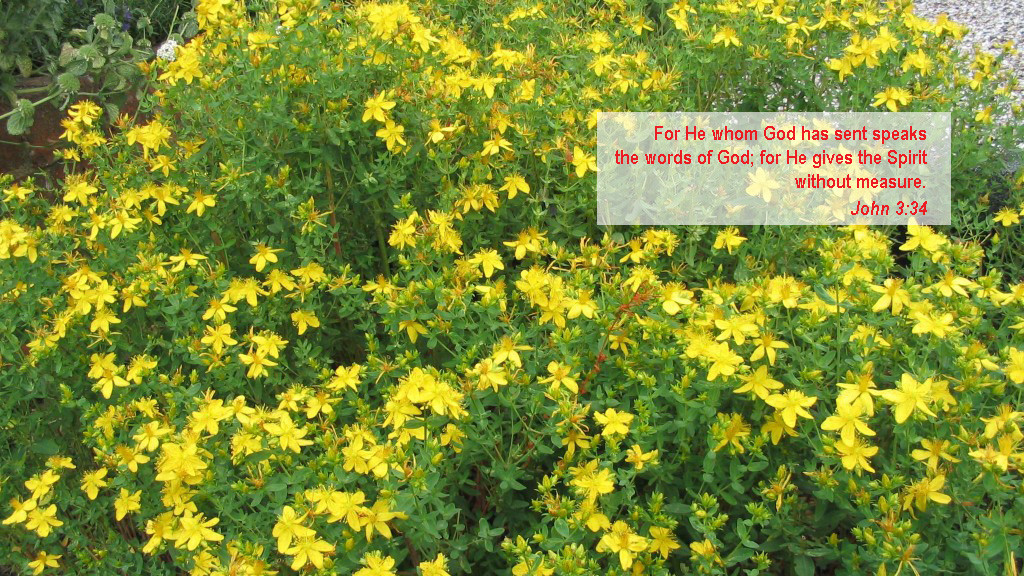
 Hypericum perforatum. (Symphytum officinale)
 Place.
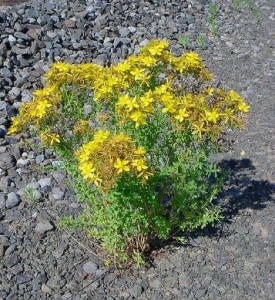
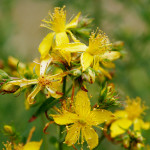
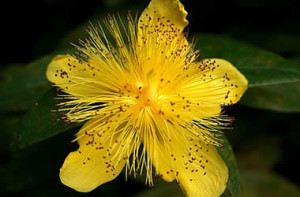 singular wound herb; boiled in wine and drank, it heals inward hurts or bruises; made into an ointment, it open obstructions, dissolves swellings, and closes up the lips of wounds. The decoction of the herb and flowers, especially of the seed, being drank in wine, with the juice of knot-grass, helps all manner of vomiting and spitting of blood, is good for those that are bitten or stung by any venomous creature, and for those that cannot make water. Two drams of the seed of St. John’s Wort made into powder, and drank in a little broth, doth gently expel choler or congealed blood in the stomach. The decoction of the leaves and seeds drank somewhat warm before the fits of agues, whether they be tertains or quartans, alters the fits, and, by often using, doth take them quite away. The seed is much commended, being drank for forty days together, to help the sciatica, the falling sickness, and the palsy.
 Melissa officinalis. (Family: Lamiaceae)
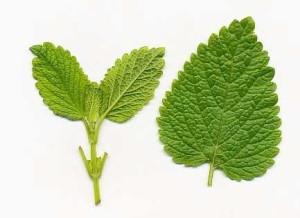
 electuary with honey, according as the disease is you shall be taught at the latter end of my hook. The Arabian physicians have extolled the virtues thereof to the skies: although the Greeks thought it not worth mentioning. Seraphio says, it causes the mind and heart to become merry, and revives the heart, faintings and swoonings, especially of such who are overtaken in sleep, and drives away all troublesome cares and thoughts out of the mind, arising from melancholy or black choler; which Avicen also confirms. It is very good to help digestion, and open obstructions of the brain, and hath so much purging quality in it (saith Avicen) as to expel those melancholy vapours from the spirits
 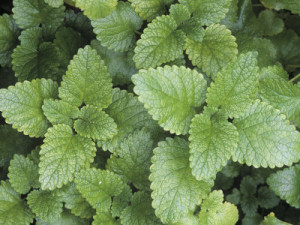 and blood which are in the heart and arteries, although it cannot do so in other parts of the body. Dioscorides says, That the leaves steeped in wine and the wine drank, and the ‘leaves externally applied, is a remedy against the stings of a scorpion, and the bitings of mad dogs; and commends the decoction thereof for women to bathe or sit in to procure their courses; it is good to wash aching teeth therewith, and profitable for those that have the bloody-flux. The leaves also, with a little nitre taken in drink, are good against the surfeit of mushrooms, helps the griping pains of the belly; and being made into a electuary, it is good for them that cannot fetch their breath: Used with stilt, it takes away wens, kernels, or hard swellings in the flesh or throat; it cleanses foul sores, and eases pains of the gout. It is good for the liver and spleen. A tansy or candle made with eggs, and juice thereof while it it is young, putting to it some sugar and rosewater, is good for a woman in child-bed, when the after-birth is not toroughly voided, and for their faintings upon or in their sore travail. The herb bruised and boiled in a little wine and oil, and laid warm on a boil, will ripen it, and break it.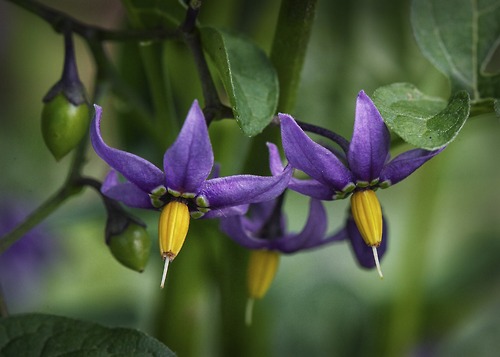
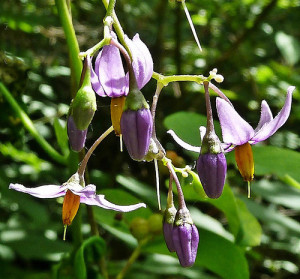 Solanum dulcamara. (Family Solanaceae)
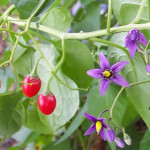 Descript
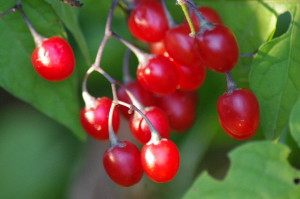 Place
Place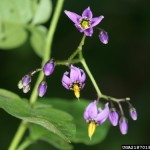 We have now showed you the external use of the herb; we shall speak a word or two of the internal, and so conclude. Take notice, it is a Mercurial herb, and therefore of very subtile parts, as indeed all Mercurial plants are ; therefore take a pound of the wood and leaves together, bruise the wood (which you may easily do, for it is not so hard as oak) then put it in a pot, and put to it three pints or white wine, put on the pot-lid and shut it close; and let infuse hot over a gentle fire twelve hours, then strain it out, so have you a
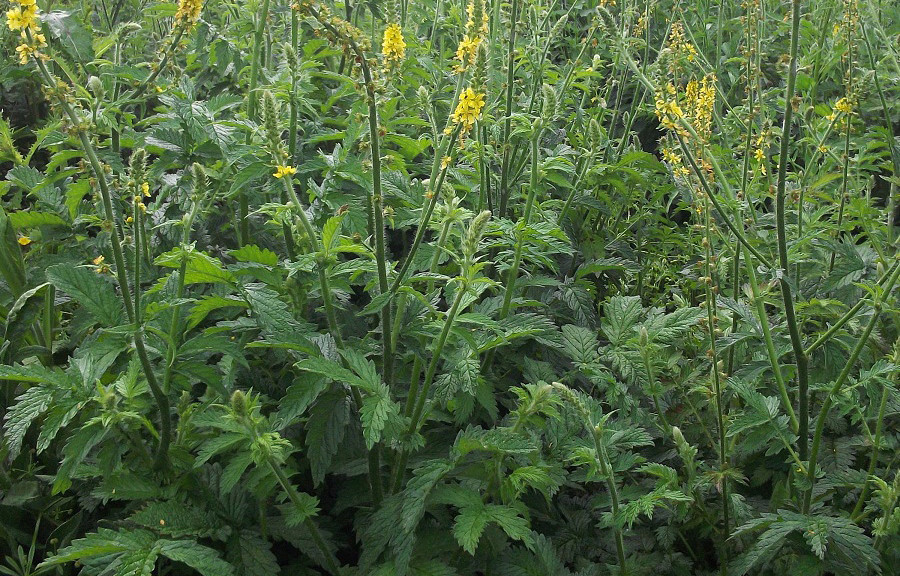
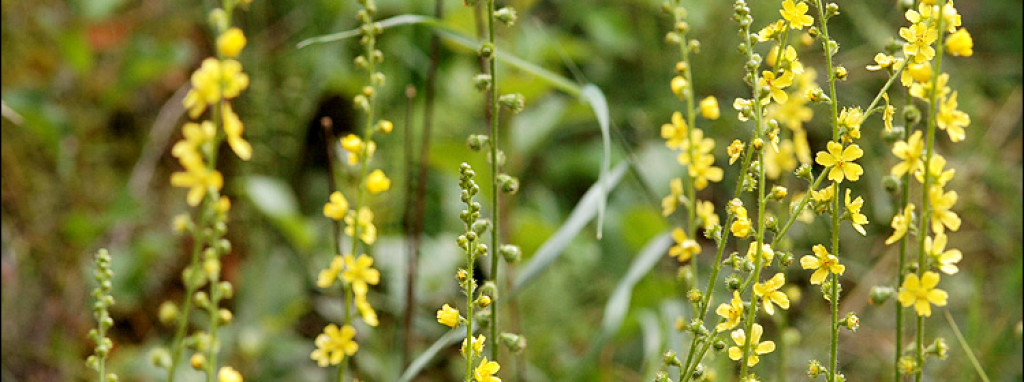
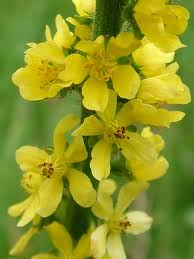
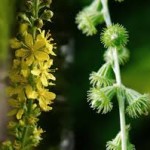 thereof grow many small yellow flowers, one above another, in after which come rough heads of seed, hanging downwards, which will cleave to and stick upon garments, or any thing that shall rub against them. The knot is black, long, and somewhat woody, abiding many .years, and shooting afresh every Spring ; which , though small, hath a reasonable good scent.